







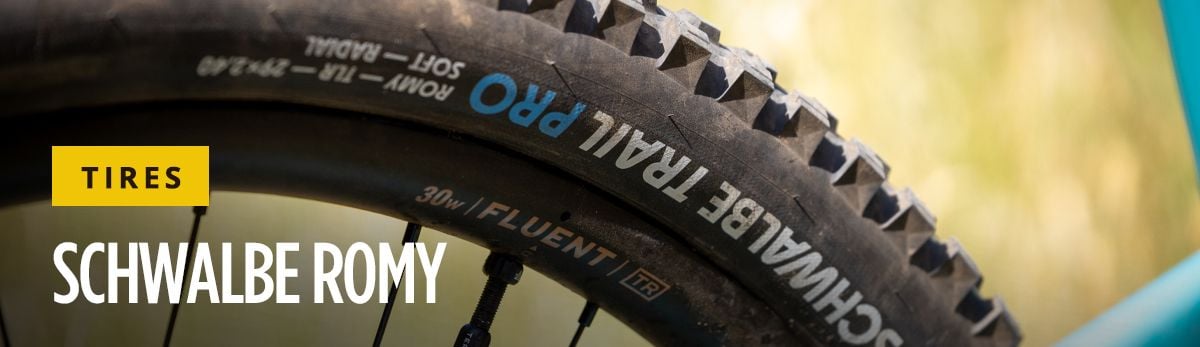
Schwalbe's Romy marks a first for the brand's radial lineup: a lighter, more nimble all-mountain tire that pushes radial casing technology beyond its gravity-focused origins — and into the hands of riders who actually like to pedal. With a quick-rolling center tread, flexible shoulder lugs, and a 2.4" option no radial has offered before, we took it deep into PNW loam to find out if the tradeoffs are worth it.
Trickle-Down Traction
Meet Romy, Schwalbe's newest all-mountain radial—and a first of sorts. With a faster, more versatile all-around trail focus, Romy pushes Schwalbe's radial frontier beyond strictly heavy-duty gravity use cases. And it's the first radial available in a 2.4. Ever. I do feel like it was only a matter of time before we started seeing radial versions of lighter, faster, slimmer, more dynamic rubber introduced. Buzzy concepts like radial casing, once proven and accepted, inevitably trickle down into more applications where traction, damping, and control are at a premium—and that's most off-road riding. So here we are.
Mind you, the purpose of this demonstration is not the standalone evaluation of radial design—rather how radials translate to lighter, more nimble applications beyond the scope of aggressive enduro riding. Schwalbe rolled out radial variants of the Albert and Magic Mary in the fall of 2024 to much fanfare with the idea that a more flexible casing would offset the bulky feel of gravity tires. Believe the Hype some said. Best thing since tubeless claimed others. Advocates describe a more planted, ground-hugging ride-feel, especially over roots, off-camber terrain, and natural features. Skeptics bristled at increased rolling resistance, squirmy sensations and of course, took issue with their weight. Romy aims to counter all of that by offering the handling benefits of a radial in a snappier, more lively package. Is there such thing as free traction AND free speed? That's what we're here to find out.
Radial rundown
So what's the deal with radials? Don't worry—I'll make this quick. Radial casing technology has quickly become the newest hotness in gravity and enduro circles. Borrowed from automotive design, the concept swaps the 45° crisscross thread angles of traditional bias-ply casings for a steeper, more perpendicular layout relative to the direction of tire-travel. Translation: it simply changes the way tires deform under load. Radials drape over terrain much easier, tempering chatter, smoothing square-edge impacts, and generating a larger, more connected contact patch. More contact = more grip = more control. You dig? Good. .
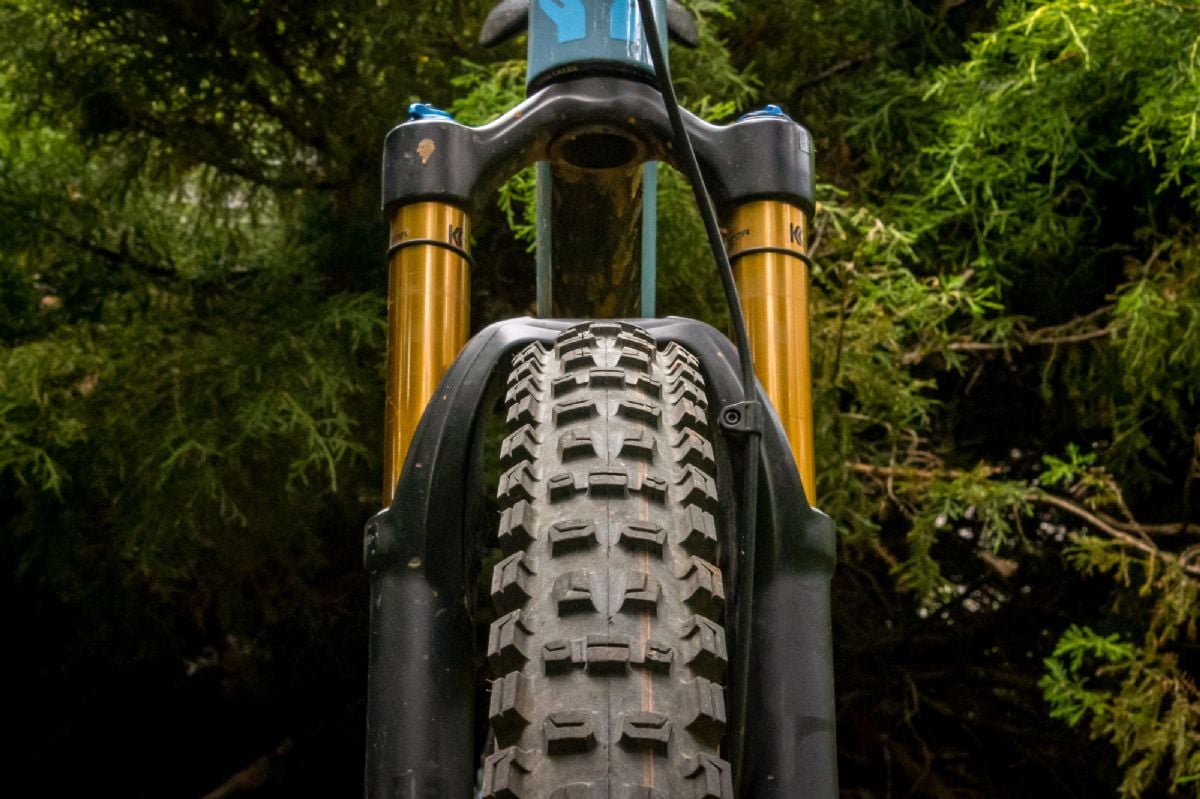
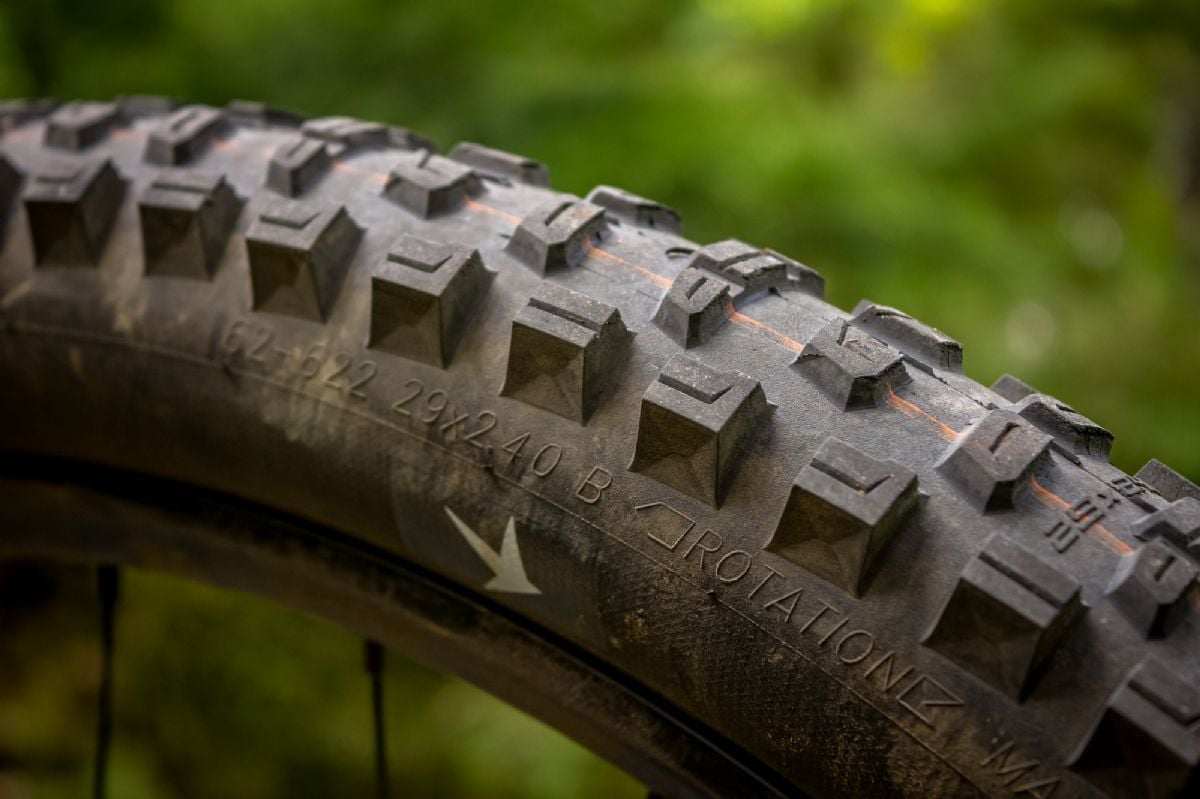
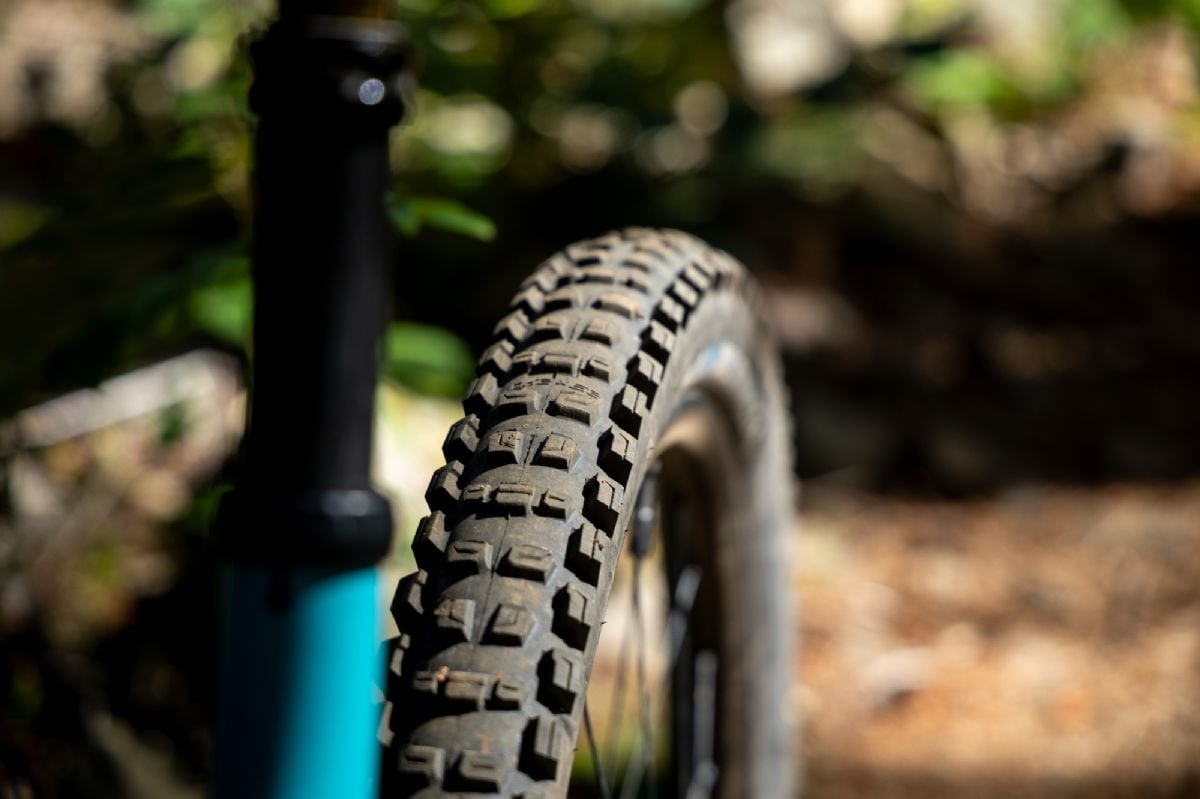
Romy employs low-profile clusters of dense center tread flanked by larger, flexier full-sized shoulder lugs. Within Schwalbe's radial lineup, Romy is positioned as a faster, more streamlined combination of Albert and Magic Mary but the tread pattern feels closer to a Dissector: quick down the middle with predictable bite in the corners. I'm running the Trail Pro versions in the Soft compound with the 2.5 option (1122g) up front and 2.4 (1052g) in the rear. Romy is also available in standard Trail, Gravity, and Gravity Pro casing options as well as Mid compound for enhanced durability.
First Tracks
Right away I notice on my trail bike (Yeti SB130 Lunch Ride) the Romys feel compact. Width, knobs, center tread. All of it. And they feel small because they are. Relative to the rest of Schwalbe's radial lineup, Romy is slightly undersized. The 2.5 measures 2.4. Same with the 2.4 which lands at 2.3. The contrast is amplified here as I'm replacing an Assegai/Minion combo which run reliably plump. Romy's slim profile isn't a bad thing per se, just something to know going in. But it does feel small on a big bike.
Because radials have softer sidewalls and more supple casings, higher pressures are necessary—the standard being roughly 3–6 PSI above the Maxxis baseline. So in theory, if I like my Minions at 21 PSI, I should love my radials at 26. Or so I'm told.
In practice, I found the Romys somewhat pressure-finicky, especially up front. On rocky, loose-over-hard and steep, rooty descents, the higher pressures felt a bit skittery, so I dropped from 26 into the 21–23 PSI range and things settled considerably. Coming from a meatier 2.6" Assegai, I also found myself airing down more than once in pursuit of that plush, magic-carpet feel. There is, after all, no substitute for volume.
To be fair, the steep, rocky enduro lines of my first few rides were probably a bit outside Romy's intended strike zone. But it did prompt a minor epiphany: I might simply be on the wrong bike. It dawned on me that Romy feels like a tire better suited to a short-travel platform.
Short-Travel Sweet Spot
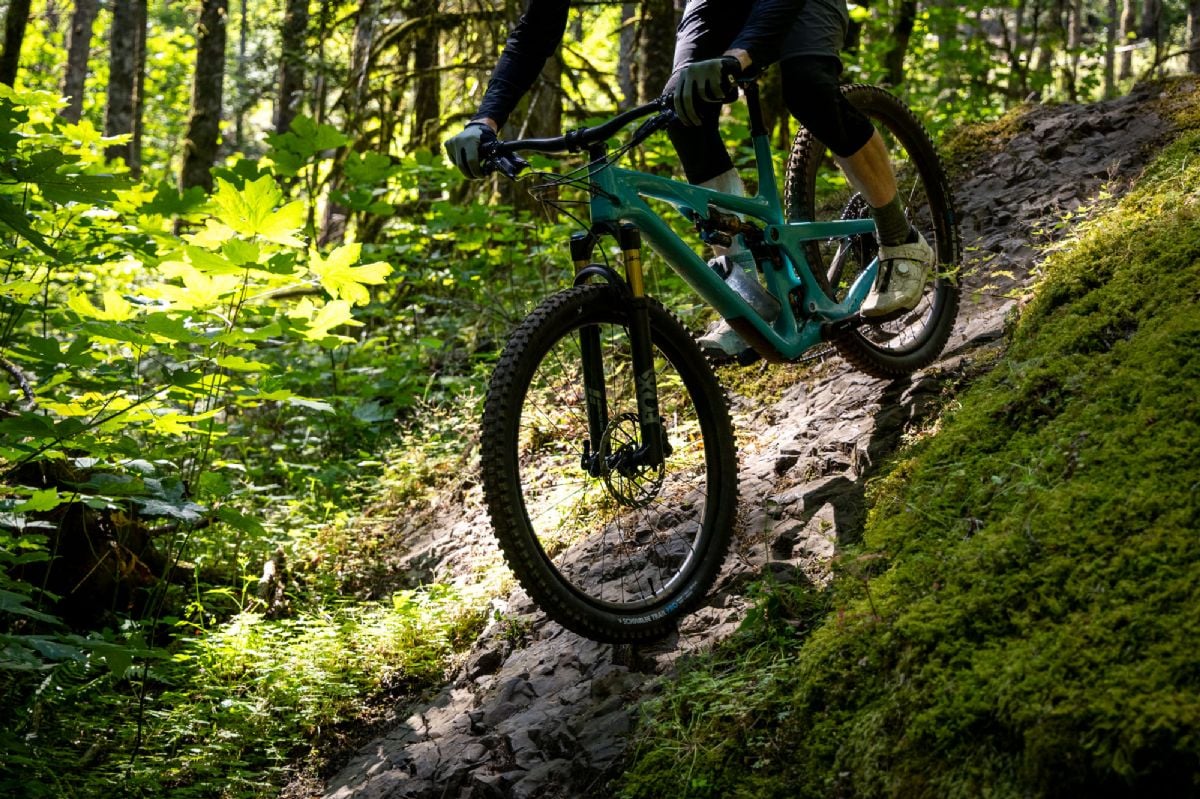
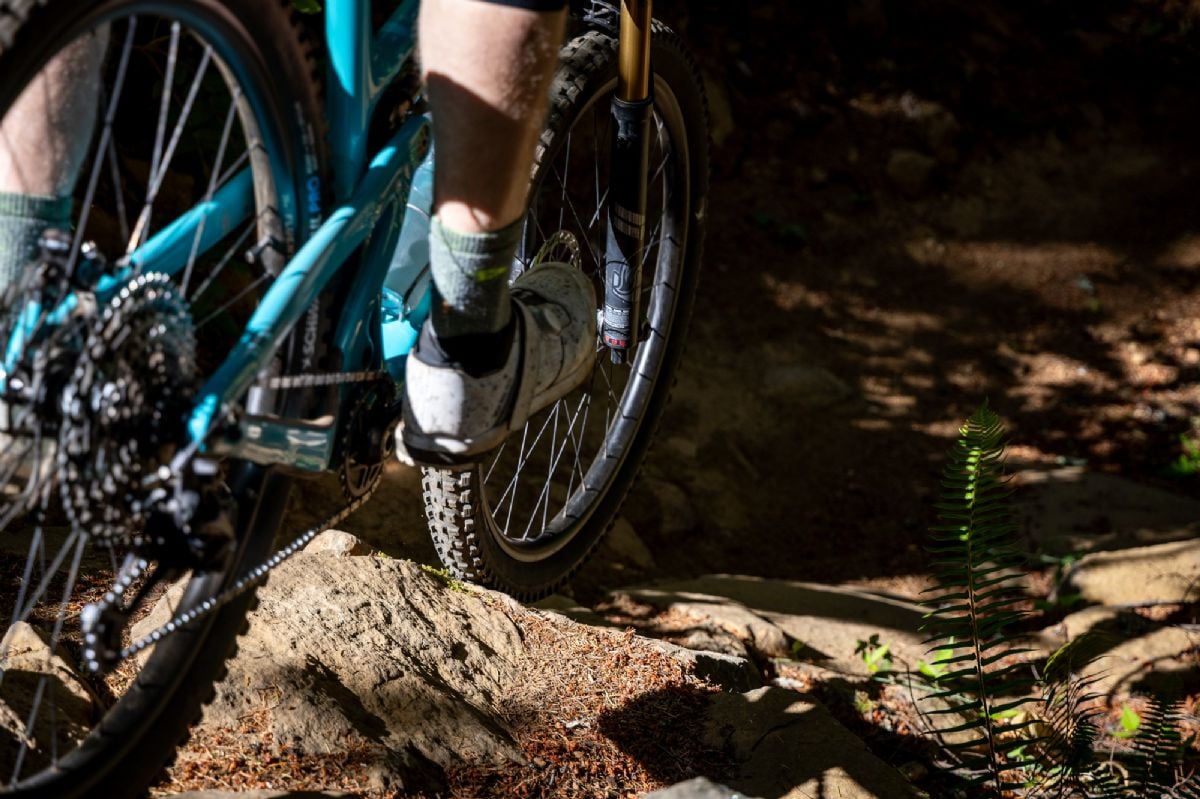
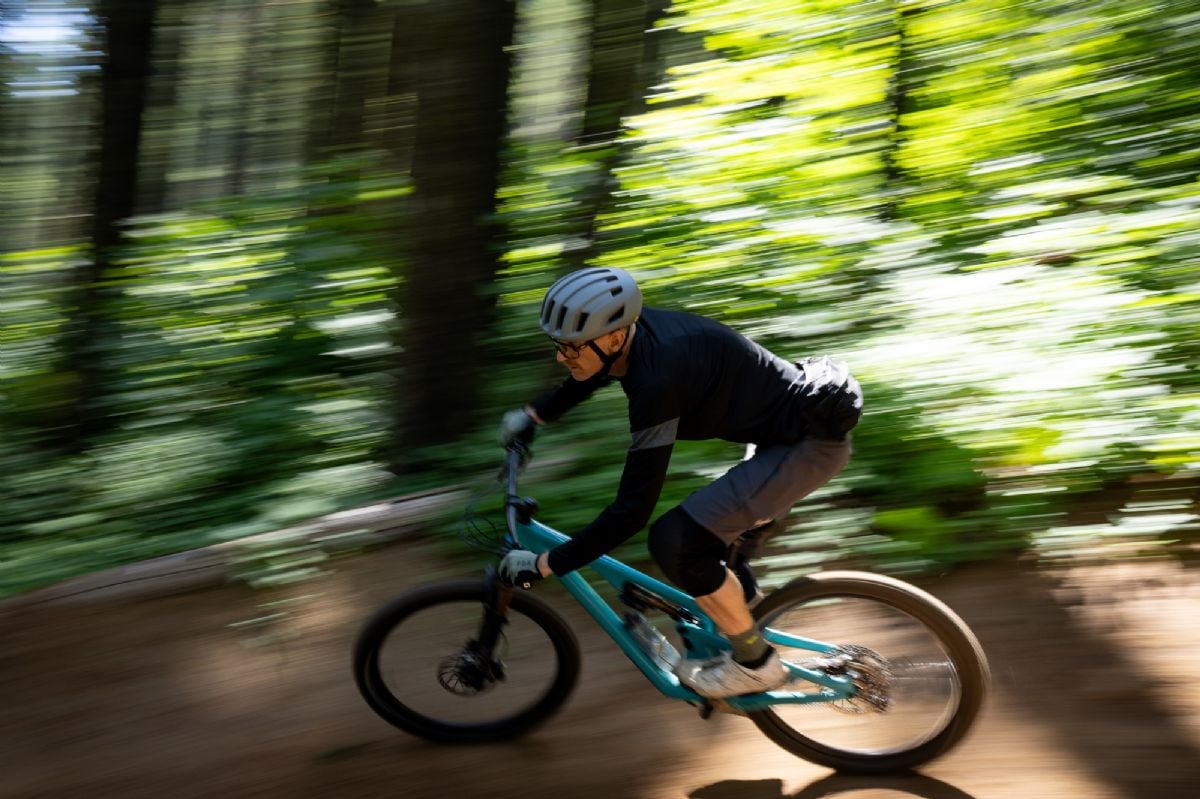
Swapped over and mounted on my Ibis Ripley (130/120) my intuition was validated. And boy howdy, in this arena, Romy's radial magic absolutely comes alive! It just feels like the right tire on the right bike in the right terrain. For context, Ripley has two basic modes: light, fast summer XC and plush, toothy trail for the rest of the year. Romy, it would seem, lands in the middle as a combination of both. While everything is a series of trade-offs, Romy balances flat-out speed with almost supernaturally-damped cornering and braking traction. Particularly in this more nimble, short-travel setting. Is it the first downcountry radial in disguise? All I know is they feel incredible on fast PNW loam and duff—digging into berms and loading through corners like an extra layer of suspension.
But let's talk speed for a minute. Romy is undeniably fast—specifically for a trail tire and notably quicker than most of the deep-trail set: Minion, Butcher, Kryptotal and the like. But it's also in a slightly different lane, more Forekaster or Magnotal than outright gravity rubber. Comparisons only go so far, but do help pin down their proper place on the shelf—which in this case is near the fast end. With an appreciable degree of free speed on gravel and pavement, Romy practically begs you to ride to the ride—or simply take the long way home from the trails.
The Verdict
To me, Romy's calling card is versatility. It is for the backcountry rider who wants to rip ridgelines and doesn't mind climbing 4k to get there. It is for the mixed-discipline set partial to frontcountry networks like Galbraith in Bellingham or Seattle's Tiger Mountain with a bit of everything. It is for the road-tripper with fast laps, loamers, and slabs on the itinerary. Above all, Romy just does a lot of things well. It is billed as an all-rounder and that's exactly what it is. It shines just as brightly on the climbing trails as the downs, flexing up roots, rocks, and holding traction out of the saddle, even when things get loose. And while the radial grip is not the surprise here, it's Romy's zippy, agile character that feels refreshingly new.
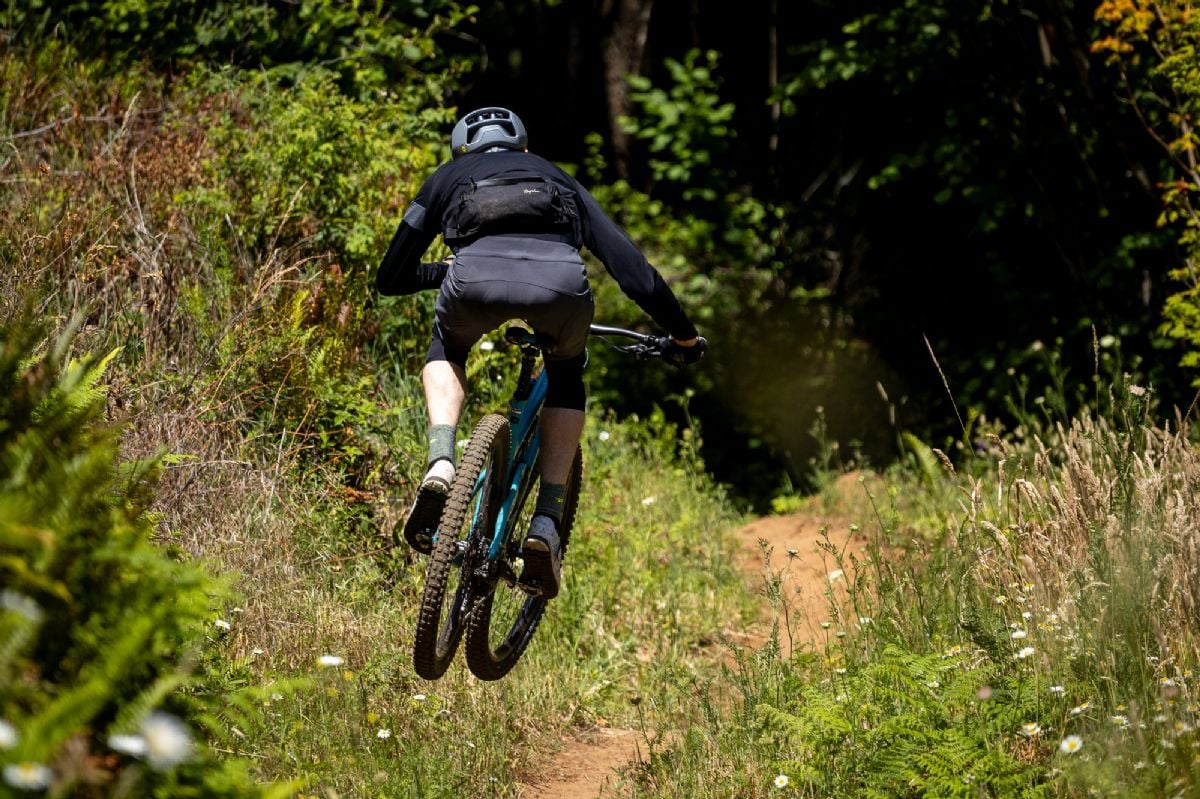
Romy excels in two distinct scenarios: as a matched set, they thrive in short-travel mode, adding extra tooth, control, and capability to otherwise taut, lightweight builds. On bigger trail bikes, both the 2.4 and 2.5 options are great as a rear paired with a meatier, grippier Albert or Magic Mary up front. A third arena I feel obligated to mention: Romy absolutely shines on all-day backcountry epics, swift enough to bash 20 miles of upcountry Jeep trail with plenty of tooth for rowdy feature-packed black diamond descents. The radial superpowers fare particularly well in dry, sandy, and loose conditions. I have absolutely no doubt that the fast radial segment is only going to grow, and with the Romy, it feels like it is Schwalbe's game to win while everyone else catches up.
Pros
- Fastest radial on the market: low-profile knobs spin up easily and hold their speed
- Lightweight: Romy runs lean within the radial category
- Radial Grip: same legendary traction as other Schwalbe radials
- Excels in dry, loose, and sandy conditions
- Versatility: good at everything, climbing, descending, cornering, braking
- Smooth, supple, playful ride-feel in a short-travel mode
- Great as a rear paired w/ Albert or Mary for more aggressive trail duty
Cons
- Slightly undersized for a dedicated trail tire
- Pressure sweet spot is a bit finicky to dial in
- Lighter, more supple tires tend to diminish the radial effect
- A Super Soft option might be good for running up front